Seven seconds. That's how long it takes a guest to form a first impression of your establishment. Not of your room. Not of your restaurant. Of your threshold. This figure, borrowed from the psychology of perception, should head every hospitality art direction project. It almost never appears anywhere.
Arrival, the forgotten moment
The hotel industry invests heavily in room renovations. In food, in wellness, in technology. These investments are visible, photographable, comparable on booking platforms. They follow a clear commercial logic.
Arrival, on the other hand, often remains an administrative procedure. Check-in, ID check, key card, room number. Sometimes a smile. Rarely an intention. The hotelier has thought of everything — except the precise moment when the guest decides, in a few seconds, how they will feel for the hours or days that follow.
This is a deep strategic mistake. The first moment shapes the perception of everything that follows: it's the halo effect, well documented in cognitive psychology. A cold arrival tints everything after it with a slight disappointment, even if the room is perfect. A successful arrival, by contrast, creates a benevolent lens that withstands the small hiccups of a stay. The lobby isn't a transit space. It's the filter through which everything will be read.
What your guests really feel
All five senses are active from the moment the threshold is crossed, and each sends a signal the guest registers before even being aware of processing it.
Smell is the sense most tied to memory, the most powerful, and the most neglected. A lobby scent is often perceived as neutral — which in reality means the smell of cleaning products masked by a generic diffuser. Neutral isn't a position. It's a missed opportunity.
Sound is a positioning in itself. Carefully chosen background music says something about the house's identity. Silence can say something too — as long as it's an inhabited silence, not an empty one. Establishments that leave the corridor TV on in the background have already lost the battle.
Light, finally, can welcome or intimidate. Lighting that's too white evokes a hospital or an office. Lighting that's too dark can feel opaque, even unsettling. Arrival lighting should be the light of an invitation — neither too exposed nor too restrained.
"A lobby that smells of generic clean says: we have cleaned. A lobby that smells of warm wood and fresh flowers says: we were expecting you."
Three actionable levers
The scent sequence. Choose — or better, create — a unique signature scent. Not a supermarket diffuser, not a generic "fresh linen" aroma. A fragrance designed for the establishment, that tells something about its land, its season, its personality. This scent must be consistent across every touchpoint: lobby, corridors, rooms, linen. When guests get home and open their suitcase, the scent brings them back to you.
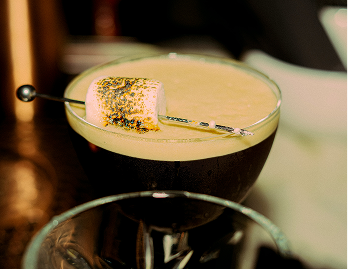
Staging the wait. If check-in takes three minutes — and it always does — those three minutes must be memorable. A welcome drink suited to the season and the time of arrival. A handwritten card on the desk. A detail that shows the arrival was expected, prepared, thought through. It isn't the cost that counts here: it's the intention. A glass of lemon and fresh mint water in summer costs less than a bottle of mineral water — and says infinitely more.
The first sentence. Train teams to replace "Do you have a reservation?" — which turns the welcome into a ticket counter — with a sentence that names, recognises, personalises. "Good evening, Mr Bertrand, we were expecting you" takes no longer to say. Its effect on how the stay is perceived is beyond comparison.
The case of the Hôtel des Brumes
This is exactly the work we carried out for the Hôtel des Brumes: rethinking arrival from A to Z. A scent identity created in collaboration with a local perfumer, a welcome sequence redesigned with the team, signage revisited to guide without taking over. The result isn't spectacular in the Instagram sense of the word. It's right. And that's precisely why it works.
Arrival isn't an operational problem. It's a matter of staging. And like all staging, it is worked on, rehearsed and perfected — until it feels natural.